
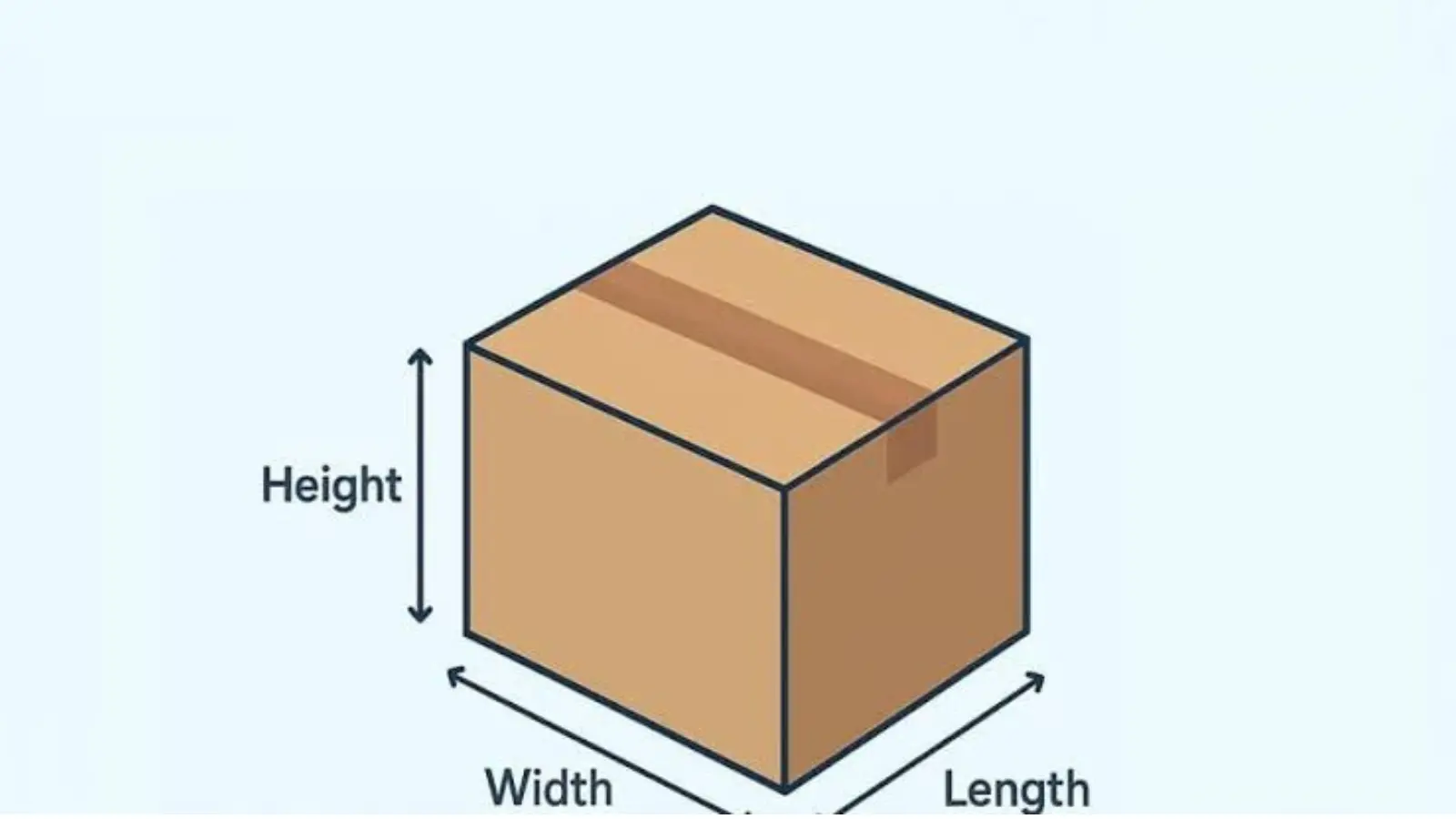
When people see measurements written as length × width × height, they are usually looking at the three basic dimensions used to describe the size of an object or space. Length generally describes how long something is, width describes how wide it is, and height describes how tall it is from the bottom to the top. These measurements are commonly written as L × W × H, such as 60 × 40 × 30 cm. Understanding length width height is important when buying furniture, measuring rooms, checking product dimensions, planning storage, comparing objects, or determining whether something will fit into a particular space. Although the order can sometimes vary depending on the product or industry, length, width, and height together provide a simple way to describe three-dimensional size.
What Does Length Width Height Mean?
The phrase length width height refers to three measurements used to describe the dimensions of a three-dimensional object.
In simple terms:
- Length tells you how long an object is.
- Width tells you how wide the object is.
- Height tells you how tall the object is.
- Together, they describe the object’s overall dimensions.
For example, imagine a rectangular storage box measuring:
60 cm × 40 cm × 30 cm
If the manufacturer uses the standard L × W × H format:
- Length = 60 cm
- Width = 40 cm
- Height = 30 cm
This information gives you a much clearer idea of the box’s physical size than simply saying that it is “large.”
The same principle can be used for furniture, appliances, packages, rooms, buildings, containers, vehicles, and many other things.
Length vs Width vs Height
The easiest way to understand the three dimensions is to think about the direction in which each measurement travels.
What Is Length?
Length normally describes the longest horizontal dimension of an object.
For example, if you are measuring a table from one end to the other, that measurement is usually its length.
Length can be measured in:
- Inches
- Feet
- Centimeters
- Meters
- Millimeters
- Yards
However, the exact definition can depend on the object and the manufacturer’s measurement convention.
What Is Width?
Width describes how wide an object is from one side to the other.
For a rectangular table, width might be the distance from the front edge to the back edge.
For example:
Table dimensions: 180 × 90 × 75 cm
This could mean:
- Length: 180 cm
- Width: 90 cm
- Height: 75 cm
The table is therefore 180 cm long, 90 cm wide, and 75 cm tall.
What Is Height?
Height generally describes the vertical measurement from the bottom of an object to its highest point.
For a person, height means how tall they are when standing upright.
For a cabinet, height usually means the distance from the floor or bottom to the top.
For a building, height describes how far the structure extends vertically.
How Do You Read L × W × H?
One of the most common ways to display dimensions is:
L × W × H
The letters stand for:
- L = Length
- W = Width
- H = Height
For example:
80 × 50 × 40 cm
When the manufacturer states that the order is L × W × H, you would read this as:
80 cm long × 50 cm wide × 40 cm high.
It is important not to assume the order automatically. Some companies use different conventions, such as W × D × H, where D means depth.
Always check the product description when exact dimensions matter.
Why Are Length Width Height Measurements Important?
Knowing the three dimensions of an object can prevent many practical problems.
Imagine ordering a sofa online. The product description says the sofa is 220 cm long. That information alone does not tell you whether it will fit through your doorway.
You may also need to know:
- Width
- Height
- Depth
- Packaging dimensions
- Doorway dimensions
- Room dimensions
The same applies to refrigerators, beds, wardrobes, desks, televisions, boxes, and other large items.
Length width height measurements help you determine whether something will:
- Fit inside a room.
- Fit through a doorway.
- Fit inside a vehicle.
- Fit into a storage area.
- Fit on a shelf.
- Fit under a counter.
- Fit inside a shipping box.
Length Width Height Example
Suppose you have a rectangular container with these dimensions:
100 cm × 60 cm × 50 cm
Assuming the order is L × W × H:
| Measurement | Dimension |
|---|---|
| Length | 100 cm |
| Width | 60 cm |
| Height | 50 cm |
This means the container extends 100 cm from one end to the other, is 60 cm wide, and stands 50 cm high.
This format is especially useful because all three dimensions can be understood at a glance.
How to Measure Length, Width and Height
You can measure most objects using a tape measure, ruler, measuring stick, or laser distance meter.
Step 1: Identify the Object’s Orientation
Before measuring, decide which direction represents the length, width, and height.
For a normal rectangular object:
- Measure horizontally from end to end for length.
- Measure across the object for width.
- Measure vertically from bottom to top for height.
Step 2: Use the Same Unit
Try to measure all three dimensions using the same unit.
For example:
120 cm × 60 cm × 75 cm
is easier to understand than:
1.2 m × 60 cm × 750 mm
Although these measurements can represent the same physical dimensions, using one unit makes comparison easier.
Step 3: Measure the Widest or Longest Relevant Points
For irregular objects, measurement can become more complicated.
You may need to measure the object’s:
- Maximum length
- Maximum width
- Maximum height
This is particularly important when determining whether an irregular object will fit through a doorway or into a storage space.
Length Width Height in Feet and Inches
Measurements are often provided in centimeters or meters internationally, while feet and inches remain common in countries such as the United States.
For example:
180 cm is approximately 5 feet 11 inches.
When measuring height, people often use feet and inches rather than centimeters.
For example:
- 5 ft 6 in
- 5 ft 10 in
- 6 ft
- 6 ft 2 in
For objects, however, dimensions may be presented in either metric or imperial units.
Common Measurement Conversions
| Measurement | Approximate Equivalent |
|---|---|
| 1 inch | 2.54 cm |
| 1 foot | 30.48 cm |
| 1 yard | 91.44 cm |
| 1 meter | 100 cm |
| 1 meter | 3.28 feet |
| 1 centimeter | 0.39 inches |
These conversions are useful when comparing measurements from different sources.
What Is the Difference Between Height and Length?
The main difference is direction.
Length generally describes horizontal extension, while height generally describes vertical extension.
For example, consider a wardrobe:
- Length: 120 cm
- Width: 50 cm
- Height: 200 cm
The wardrobe is much taller than it is long.
For a person, however, height is the standard measurement used to describe how tall they are.
That is why we say someone is 6 feet tall, rather than saying they have a length of 6 feet.
What Is the Difference Between Width and Depth?
Width and depth are sometimes confused because both describe horizontal dimensions.
The difference usually depends on orientation.
For example, a cabinet might be described as:
200 cm W × 60 cm D × 90 cm H
Here:
- Width = 200 cm
- Depth = 60 cm
- Height = 90 cm
Depth describes how far the object extends from the front toward the back.
Some manufacturers use length instead of width or depth, so it is important to check the stated measurement order.
Length Width Height for Furniture
Furniture is one of the most common situations where these measurements matter.
Before buying a sofa, bed, desk, cabinet, or dining table, check all available dimensions.
For example:
| Furniture | Length | Width/Depth | Height |
|---|---|---|---|
| Sofa | 220 cm | 90 cm | 85 cm |
| Desk | 140 cm | 70 cm | 75 cm |
| Cabinet | 100 cm | 45 cm | 180 cm |
| Dining table | 180 cm | 90 cm | 75 cm |
These numbers can help you decide whether the furniture is appropriate for your available space.
Length Width Height for Shipping
Shipping companies also rely heavily on package dimensions.
A package might be listed as:
80 × 50 × 40 cm
The carrier can use those dimensions along with the package’s weight to determine shipping requirements.
For large or international shipments, dimensional measurements can be just as important as physical weight.
Before shipping an item, measure the outside of the package rather than assuming the item’s dimensions are the same as the package dimensions.
Packaging can add:
- Cardboard thickness
- Protective foam
- Plastic
- Air cushions
- Other materials
As a result, the shipping box may be larger than the product itself.
Length Width Height for Rooms
The same concept applies to rooms.
Suppose a bedroom measures:
5 m × 4 m × 3 m
This could mean:
- Length = 5 meters
- Width = 4 meters
- Height = 3 meters
The first two dimensions help determine floor area:
5 × 4 = 20 square meters
The height becomes important when calculating the room’s volume:
5 × 4 × 3 = 60 cubic meters
Therefore, understanding length width height can also help with calculations involving area and volume.
How Length, Width and Height Affect Volume
When an object is rectangular or box-shaped, you can calculate its volume using:
Volume = Length × Width × Height
For example:
2 m × 1 m × 0.5 m
The volume is:
1 cubic meter
This calculation is useful for:
- Storage containers
- Rooms
- Shipping boxes
- Aquariums
- Tanks
- Warehouses
- Furniture
- Construction projects
The units also matter. If the dimensions are measured in centimeters, the volume will be expressed in cubic centimeters.
Length Width Height vs Height of a Person
Although the phrase length width height is commonly used for objects, human height is usually discussed separately.
If someone is 6 feet tall, their height is a vertical measurement.
People searching for celebrity measurements often use phrases such as:
- How tall is [celebrity name]?
- [Celebrity name] height
- [Celebrity name] height in feet
- [Celebrity name] height in cm
- [Celebrity name] height comparison
- [Celebrity name] vs average height
Celebrity height comparisons are popular because photographs can sometimes make people appear taller or shorter depending on camera angle, footwear, posture, and the people standing beside them.
Why Can Height Appear Different in Photos?
A person’s apparent height can vary considerably in photographs.
Several factors can affect how tall someone appears:
Camera Angle
A low camera angle can make a person look taller, while a high angle can make them appear shorter.
Footwear
Shoes can add some height. Boots, athletic shoes, and especially elevated footwear can make small differences in apparent height.
Posture
Someone standing straight may appear noticeably taller than the same person when slouching.
Perspective
A person closer to the camera can appear larger than someone standing farther away.
Comparison Person
Height is often judged relative to someone else. If two people have only a small height difference, their positioning can make the difference appear larger or smaller.
What Factors Influence Human Height?
Human height is influenced by several factors, with genetics playing a major role.
Genetics
Genes inherited from parents strongly influence potential adult height.
However, height is not controlled by a single gene. It is influenced by many genetic factors.
Nutrition
Adequate nutrition during childhood and adolescence supports normal growth.
Important nutrients include:
- Protein
- Calcium
- Vitamin D
- Other vitamins and minerals
Poor nutrition can interfere with normal growth, particularly during important developmental periods.
Sleep
Sleep is an important part of healthy development. Children and teenagers generally require more sleep than adults.
Physical Activity
Regular physical activity supports overall health, strong bones, muscles, and healthy development.
Exercise does not simply make an adult dramatically taller, but maintaining good health during childhood supports normal physical development.
Health Conditions
Certain medical conditions can influence growth and final adult height.
For that reason, two people with similar genetic backgrounds can still end up with different heights.
Does Height Change After Adulthood?
For most people, significant natural height growth ends after the growth plates close, generally around the later teenage years or early adulthood.
However, measured height can vary slightly during the day.
People can be a little taller after waking up and slightly shorter later in the day because the spinal discs experience compression while standing and moving.
This does not mean someone has permanently gained or lost height.
How to Compare Two People’s Heights
The simplest way to compare two heights is to convert them into the same unit.
For example:
- Person A = 180 cm
- Person B = 170 cm
The difference is:
180 − 170 = 10 cm
Person A is therefore 10 cm taller.
The same approach works for celebrity height comparisons.
Common Mistakes When Reading Dimensions
People often misunderstand measurements because they assume every company uses the same order.
Here are some common mistakes:
- Assuming the first number is always length.
- Confusing width with depth.
- Ignoring the measurement unit.
- Forgetting that packaging adds size.
- Measuring furniture without accounting for doors or handles.
- Comparing feet and centimeters without converting them.
- Assuming photographs accurately show height differences.
Always read the measurement label or manufacturer’s description before making an important decision.
Interesting Facts About Length Width Height
Here are several useful facts about three-dimensional measurements:
- Length, width, and height describe three different dimensions.
- They are often abbreviated as L × W × H.
- Different industries may use different measurement orders.
- Height is normally measured vertically.
- Width and length are usually horizontal measurements.
- Volume can be calculated by multiplying length × width × height for rectangular objects.
- Measurements should ideally use the same unit.
- Product dimensions and package dimensions may be different.
- Human height is usually expressed in feet and inches or centimeters.
- A person’s apparent height in a photograph may differ from their measured height.
Frequently Asked Questions
What does length width height mean?
Length width height describes the three dimensions of a three-dimensional object. Length generally describes how long it is, width describes how wide it is, and height describes how tall it is.
What does L × W × H stand for?
L × W × H stands for Length × Width × Height. For example, 100 × 50 × 40 cm means 100 cm long, 50 cm wide, and 40 cm high when that order is specified.
Which comes first, length or width?
In the standard L × W × H format, length comes first and width comes second. However, manufacturers can use different conventions, so you should check the product’s measurement instructions.
Is height the same as length?
No. Height generally describes the vertical dimension, while length usually describes the horizontal dimension. The exact terminology can vary depending on the object.
How do you calculate volume using length width height?
For a rectangular object, multiply the three dimensions:
Volume = Length × Width × Height
For example, an object measuring 2 m × 1 m × 0.5 m has a volume of 1 cubic meter.
How are human height measurements different?
Human height is normally measured vertically from the ground to the top of the head while standing upright. It is commonly reported in centimeters or feet and inches.
Why do celebrities sometimes look taller or shorter?
Photography, camera angle, footwear, posture, perspective, and the height of people standing nearby can all affect how tall a celebrity appears.
Is height measured in feet or centimeters?
Both are common. Many countries use centimeters and meters, while feet and inches are widely used for human height in the United States and some other regions.
Conclusion
Understanding length width height makes it much easier to interpret the size of objects, spaces, furniture, packages, and other three-dimensional things. Length generally represents how long something is, width represents how wide it is, and height represents its vertical measurement. Together, these dimensions can also be used to calculate volume and determine whether an object will fit into a particular space. When measuring people, height is usually the most important dimension, while objects often require all three measurements. Whether you are shopping for furniture, checking product specifications, planning a room, shipping a package, or comparing physical dimensions, knowing how to read L × W × H can help you make more accurate decisions.

- Get the best pickup lines, flirty texts, romantic jokes, and dating conversation starters updated daily.