
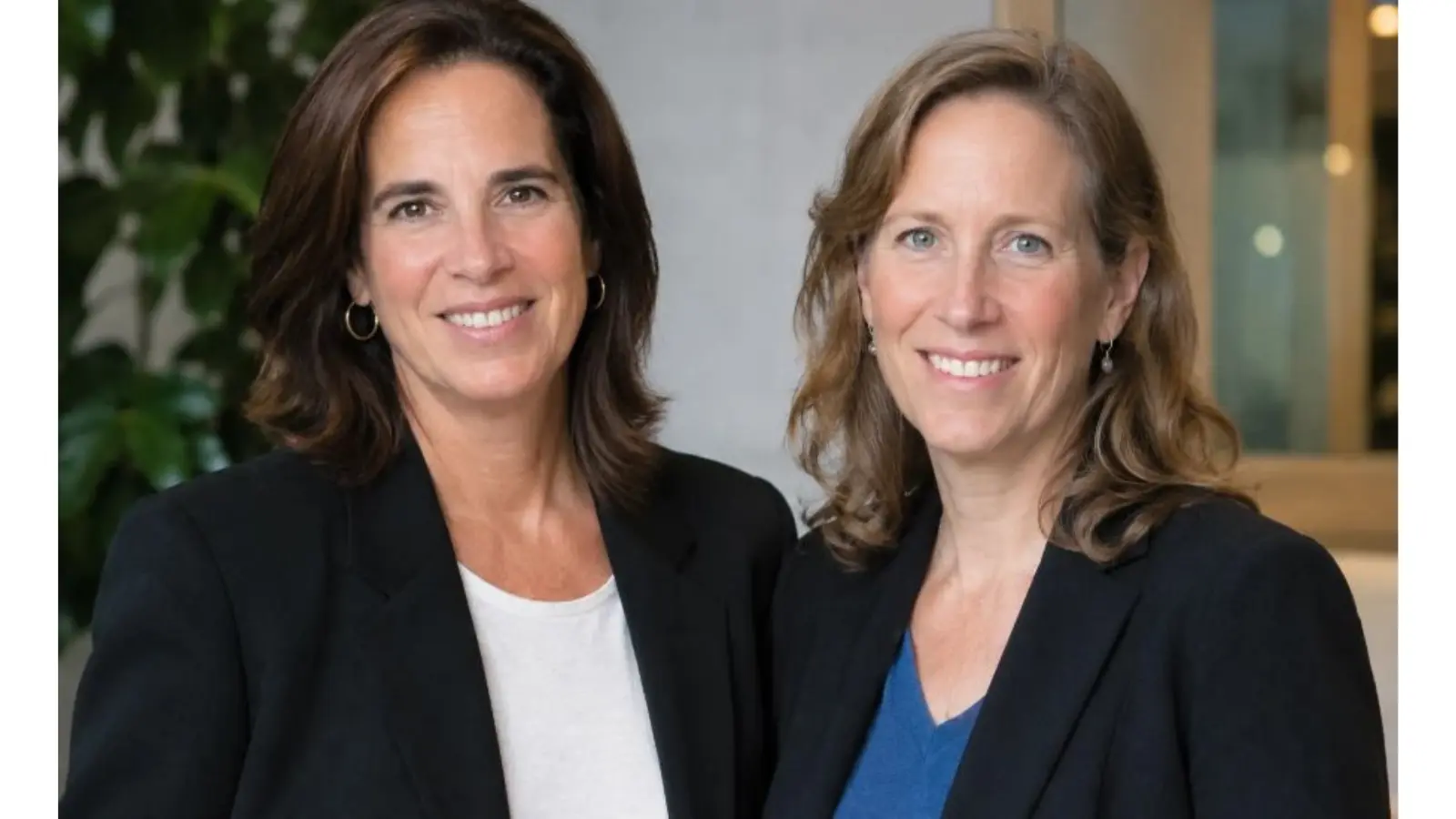
Maria Asunción Aramburuzabala and Susan Wojcicki were influential businesswomen whose careers illustrate two different paths to business success. Aramburuzabala is a Mexican investor known for her family’s historical connection to Grupo Modelo and her leadership of Tresalia Capital. Susan Wojcicki was an American technology executive who helped develop Google’s advertising business and later served as YouTube’s chief executive officer from 2014 to 2023.
Although they worked in different industries, both became prominent figures in discussions about entrepreneurship, financial success, corporate leadership, and women’s representation in business. Their careers also reveal an important distinction: business influence can come from managing investments and ownership or from helping build and lead technology platforms.
There is no established direct partnership between these women in the biographical sources discussed here. Instead, their professional experiences provide a useful comparison of investment management and technology leadership.
Who Is Maria Asunción Aramburuzabala?
Maria Asunción Aramburuzabala Larregui is a Mexican businesswoman and investor born on May 2, 1963, in Mexico City. She studied accounting at the Instituto Tecnológico Autónomo de México (ITAM) and became a prominent figure in Mexican business through her family’s interests in Grupo Modelo and her subsequent investment activities.
Her grandfather, Félix Aramburuzabala, was one of the founders of Grupo Modelo, the Mexican brewing company associated with Corona and other well-known beer brands. Her father, Pablo Aramburuzabala, held an important position in the business.
Following her father’s death in 1995, Aramburuzabala became involved in protecting and managing the family’s ownership interests. This period was important to her professional development because it placed her at the center of decisions involving corporate ownership, financial strategy, and the future of a major business investment.
Her career subsequently expanded beyond brewing. Through Tresalia Capital, she became associated with investment management, private equity, venture capital, and real estate.
Her story is therefore not simply about family wealth. It also concerns the management of business assets, the development of an investment portfolio, and the challenges involved in preserving capital while pursuing new opportunities.
Tresalia Capital and Aramburuzabala’s Investment Strategy
Tresalia Capital is a family investment firm founded by Aramburuzabala and associated with the management and diversification of the family’s wealth. The firm has developed interests across several sectors, including financial services, technology, telecommunications, venture capital, and real estate.
A major part of understanding Aramburuzabala’s career is recognizing the difference between owning a successful business and managing a diversified investment portfolio.
A company owner may depend heavily on the performance of one industry. An investment firm, by contrast, can allocate capital across different businesses and assets, potentially reducing its dependence on any single market.
Tresalia’s activities illustrate this broader approach to wealth management. Its reported investments have included technology-related businesses, telecommunications, and ventures associated with emerging companies. Its real estate activities have also been developed through Abilia, its property development business.
These investments require different forms of analysis. Venture capital involves evaluating early-stage companies and uncertain growth prospects. Private equity generally focuses on investments in established businesses, while real estate investment requires assessing property values, demand, financing, and development risks.
Aramburuzabala’s career is relevant to people researching Mexican entrepreneurs, billionaire investors, family offices, and long-term capital allocation because it demonstrates how business interests can extend beyond their original industry.
Grupo Modelo and the 2013 Acquisition
Grupo Modelo is one of the most important businesses in Aramburuzabala’s family history. The company was founded in 1925 and became internationally recognized through brands such as Corona.
The family’s stake in Grupo Modelo played a significant role in its financial history. However, the company’s acquisition by Anheuser-Busch InBev marked a major turning point.
On June 4, 2013, Anheuser-Busch InBev announced the completion of its combination with Grupo Modelo in a transaction valued at approximately $20.1 billion. The transaction consolidated control of the Mexican brewer under the international brewing group. The valuation refers to the overall transaction, not Aramburuzabala’s personal wealth.
The acquisition illustrates several important business principles.
First, corporate acquisitions can transform the ownership of major companies. Second, selling an ownership stake can provide investors with liquidity. Third, the proceeds from a transaction can create opportunities to diversify into other industries.
For Aramburuzabala, the history of Grupo Modelo helps explain the origins of her family’s wealth, while Tresalia Capital helps explain the broader investment activities associated with her business career.
These are related but distinct parts of her story: the family business established an important financial foundation, and investment management provided a means of pursuing opportunities beyond brewing.
Who Was Susan Wojcicki?
Susan Wojcicki was an American technology executive best known for her work at Google and her leadership of YouTube. She was born on July 5, 1968, in Santa Clara, California, and developed an academic background combining economics and business management.
Wojcicki graduated from Harvard University, earned a master’s degree in economics from the University of California, Santa Cruz, and completed an MBA at the University of California, Los Angeles.
Before joining Google, she worked at Intel. In 1998, she rented her garage to Larry Page and Sergey Brin while they were developing the company that would become Google. She joined Google in 1999 as its first marketing manager and became one of its early employees.
Her professional importance extends well beyond this early connection. Wojcicki became a senior leader in Google’s advertising and commerce operations and helped oversee the development of products and systems that supported the company’s commercial growth.
Her career demonstrates how marketing, product strategy, economics, and technology can work together to build a sustainable digital business.
Susan Wojcicki’s Role in Google’s Advertising Business
Google’s growth depended on more than search technology. The company also needed an effective way to generate revenue while allowing users to access its services.
Wojcicki played a significant role in Google’s advertising organization. Her responsibilities included senior leadership in advertising and commerce, with involvement in the development and direction of products such as AdWords, AdSense, DoubleClick, and Google Analytics.
These products serve different purposes within digital marketing. Advertising platforms help businesses reach audiences, publisher advertising systems can help website owners monetize content, and analytics tools provide information about campaign performance and user behavior.
This commercial infrastructure helped make online advertising a central part of Google’s business model.
The distinction between building a digital product and building a business around it is important. A useful service may attract users, but sustainable operations also require revenue, investment, infrastructure, and a strategy for serving advertisers and customers.
Wojcicki’s career illustrates the importance of connecting product development with commercial strategy. It also demonstrates why technology executives often need to understand consumer behavior, marketing, financial performance, and organizational management.
Susan Wojcicki’s Leadership at YouTube
Wojcicki was an early advocate for Google’s acquisition of YouTube in 2006. She became YouTube’s CEO in February 2014 and held the position until 2023.
During her tenure, YouTube remained an important platform for entertainment, education, commentary, music, and creator-led media. Its business connected viewers, content creators, advertisers, and businesses in a global digital environment.
One important aspect of YouTube’s development is the creator economy. This term describes the ecosystem in which individuals and organizations produce content, build audiences, and may earn income through advertising, subscriptions, sponsorships, and other commercial arrangements.
YouTube’s monetization systems helped make online video a business opportunity for many creators. However, eligibility requirements and revenue opportunities vary, and not every creator earns a significant income.
Leading a platform of this scale also involves difficult responsibilities. Executives must consider copyright, content moderation, misinformation, child safety, advertiser concerns, and the effects of recommendation systems.
Wojcicki’s tenure therefore involved more than expanding a technology product. It required overseeing a large organization whose decisions affected creators, viewers, advertisers, and public discussions.
She stepped down as CEO in 2023. In August 2024, she died at age 56 after living with lung cancer for two years. Her professional legacy remains closely associated with Google’s commercial development and YouTube’s evolution as a major video platform.
Maria Asunción Aramburuzabala and Susan Wojcicki Compared
The most useful comparison between these women focuses on their industries, responsibilities, and sources of influence rather than assuming that they worked together.
| Comparison | Aramburuzabala | Wojcicki |
|---|---|---|
| Primary field | Investment and business ownership | Technology and digital media |
| Key organizations | Grupo Modelo and Tresalia Capital | Google and YouTube |
| Professional focus | Capital allocation and investment management | Product strategy, advertising, and platform leadership |
| Business environment | Brewing, finance, property, and technology investments | Search, online advertising, and video |
| Main source of influence | Investment decisions and business ownership | Executive leadership and digital product development |
| Broader significance | Diversification and financial stewardship | Digital monetization and the creator economy |
Similarities in their careers
Both women operated in complex business environments where strategic decisions could have consequences beyond a single product or department.
Aramburuzabala’s work involved assessing investments, managing assets, and pursuing opportunities across sectors. Wojcicki’s work involved developing commercial products, leading teams, and helping operate digital platforms at scale.
Both careers also demonstrate the importance of understanding how businesses create value. Investors must assess risk and potential returns, while technology executives must consider user needs, product performance, revenue, and long-term sustainability.
Important differences
Their paths to influence were substantially different.
Aramburuzabala’s professional background was closely connected to family business ownership and investment management. Wojcicki’s career developed through executive positions in a growing technology company.
One career emphasizes the management and allocation of capital; the other emphasizes product development, digital advertising, and platform operations.
These distinctions make the comparison useful without suggesting that the two women had a personal relationship or shared business venture.
Net Worth and Sources of Wealth
Another reason readers may search for both names is to compare their financial success. However, an accurate comparison requires caution because personal wealth estimates can vary by date, methodology, and the assets included.
Aramburuzabala’s wealth is associated with her family’s historical stake in Grupo Modelo, the 2013 acquisition, and subsequent investments through Tresalia Capital. Bloomberg’s billionaire profile describes the importance of the family’s sale of its Grupo Modelo stake and the firm’s wider investment portfolio.
Wojcicki’s wealth was associated with her technology career, executive compensation, and equity-related financial interests. Her years at Google and YouTube placed her within an industry where company equity and long-term participation in corporate growth can be significant sources of wealth.
The two financial profiles are not directly equivalent. Aramburuzabala’s wealth is substantially connected to business ownership and investments, while Wojcicki’s career was primarily that of a technology executive.
A reliable comparison should use dated estimates from credible financial publications and explain their methodology. Without a consistent set of estimates for the same period, it would be misleading to declare an exact winner based solely on unqualified figures.
The broader lesson is that wealth can be accumulated through different mechanisms: ownership of businesses, investment returns, executive compensation, and equity appreciation.
Women’s Leadership in Finance and Technology
Aramburuzabala and Wojcicki also provide different examples of women’s participation in senior business leadership.
Aramburuzabala became a prominent investor in Mexico, a role requiring financial judgment, governance, and the management of long-term assets. Her experience illustrates the importance of women having access to capital, ownership, and investment decision-making.
Wojcicki became one of the most recognizable women in the technology industry. She was associated with Google’s advertising development and led YouTube for nine years. She also advocated for women in technology and more supportive workplace policies, including parental leave.
Their careers show that business leadership does not follow a single route. Some leaders build influence through investments and ownership; others develop it through product management, technical organizations, and executive responsibility.
Their examples can inform discussions about professional development, access to leadership positions, mentorship, education, and workplace equality. At the same time, the success of individual executives should not be mistaken for proof that all structural barriers have disappeared.
Frequently Asked Questions
Who is Maria Asunción Aramburuzabala?
Maria Asunción Aramburuzabala is a Mexican businesswoman and investor known for her family’s connection to Grupo Modelo and her leadership of Tresalia Capital. Her professional activities include investment management and diversification across different sectors.
Who was Susan Wojcicki?
Susan Wojcicki was an American technology executive who joined Google in 1999 and served as YouTube’s CEO from 2014 to 2023. She died in August 2024 at age 56 after living with lung cancer.
Were Maria Asunción Aramburuzabala and Susan Wojcicki business partners?
The sources discussed in this article do not establish a direct business partnership between them. Their careers are compared because both became influential businesswomen in different industries.
What is Tresalia Capital?
Tresalia Capital is an investment firm associated with Aramburuzabala and her family’s wealth management. Its activities have included investments in financial services, technology, telecommunications, private equity, venture capital, and real estate.
What was Susan Wojcicki’s role at Google?
Wojcicki joined Google as its first marketing manager in 1999 and later held senior leadership responsibilities in advertising and commerce. Her work contributed to the development and direction of Google’s advertising business.
Who was wealthier?
Aramburuzabala has been publicly identified as a billionaire whose wealth is associated with investments and family business ownership. Wojcicki accumulated wealth through her technology career and related financial interests. A definitive comparison requires comparable, dated estimates and a consistent valuation method.
What can entrepreneurs learn from their careers?
Their careers highlight the importance of understanding business models, evaluating risk, adapting to changing markets, and building long-term value. Their different paths also demonstrate that investment management and technology leadership require distinct but complementary business skills.
Conclusion
Maria Asunción Aramburuzabala and Susan Wojcicki built influential careers through different forms of business leadership. Aramburuzabala’s professional story centers on the family’s historical involvement in Grupo Modelo, the development of Tresalia Capital, and the diversification of investments. Wojcicki’s story centers on Google’s advertising business and her leadership of YouTube.
Their comparison is most useful when it explains these differences clearly. One illustrates the importance of ownership, investment strategy, and financial stewardship; the other illustrates the role of product development, digital monetization, and executive leadership in the technology industry.
Neither biography needs an invented partnership or an unsupported wealth ranking to be meaningful. Their documented achievements provide sufficient material for a useful comparison of entrepreneurship, business strategy, and women’s influence in the modern economy.
