
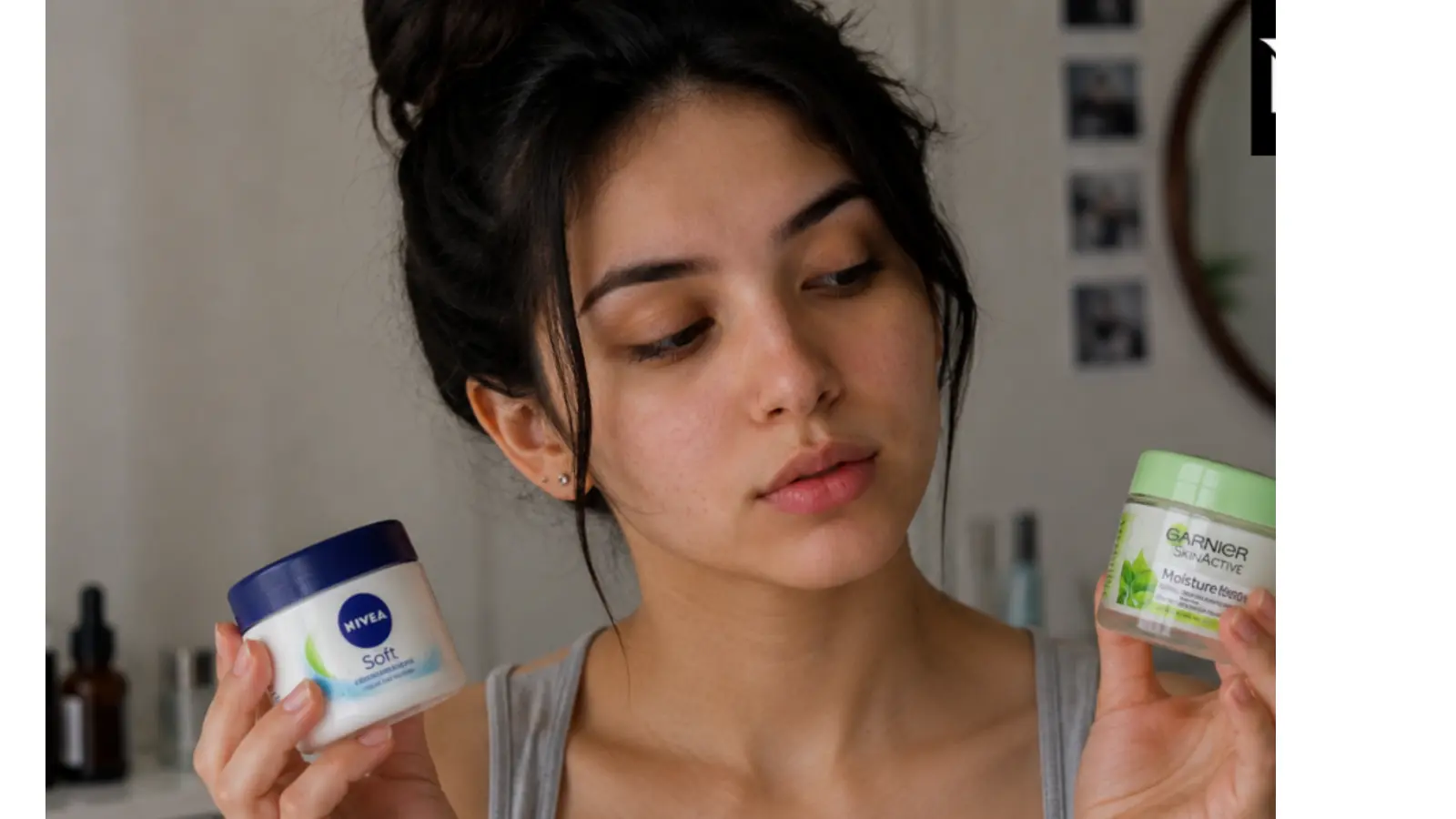
Starting a skincare routine can feel overwhelming when every brand promises softer, brighter, clearer, or healthier-looking skin. If you are new to skincare, two familiar names you may encounter are NIVEA and Garnier. Both offer affordable skincare products, but they serve slightly different needs depending on the product you choose.
Is NIVEA a good starting brand compared to Garnier? Yes. NIVEA can be a practical starting point if your main priority is everyday moisturizing, while Garnier is worth considering if you need micellar water, makeup removal, or selected products designed for dull-looking skin. However, neither brand is automatically better for every skin type.
The smartest choice depends on your skin’s needs, the ingredients in the formula, your budget, and how comfortably you can use the product every day.
In this guide, we compare NIVEA vs. Garnier for beginners, explain the differences between their skincare products, discuss common ingredients, and show you how to build a simple routine without wasting money on unnecessary products.
Quick Answer: Is NIVEA or Garnier Better for Beginners?
NIVEA is a reasonable place to start if you want a basic facial moisturizer. Garnier is worth exploring if cleansing and removing makeup are your main priorities.
Here is the practical comparison:
| Your skincare goal | What to consider |
|---|---|
| Basic daily hydration | A NIVEA or Garnier facial moisturizer that suits your skin type |
| Dry, tight-feeling skin | A cream with moisturizing ingredients and a comfortable texture |
| Oily skin | A lightweight moisturizer labeled non-comedogenic, if available |
| Makeup removal | Garnier micellar water or another suitable makeup remover |
| Dull-looking skin | A gentle routine first, followed by an optional targeted treatment |
| Sensitive skin | Fragrance-free, gentle formulas with minimal potential irritants |
| Beginner skincare on a budget | A cleanser, moisturizer, and sunscreen before optional extras |
This comparison does not mean every NIVEA moisturizer is richer than every Garnier moisturizer, or that every Garnier product is designed for brightening. Each brand has different formulas, and product availability varies by market.
The most important rule is simple: compare individual products, not just brand names.
1. Understanding NIVEA: Is It Good for Beginners?
NIVEA is a long-established personal-care brand known for moisturizers, creams, body lotions, and facial skincare. For someone beginning a skincare routine, its moisturizing products may be an accessible way to establish a consistent daily habit.
Why NIVEA may be a good starting point
Everyday moisturization. Moisturizer helps reduce water loss from the skin and improves softness and comfort. Depending on the formula, NIVEA facial moisturizers may suit people looking for straightforward daily hydration.
Different textures. Skincare products are not all interchangeable. Lotions and gel-creams often feel lighter, while richer creams may be more comfortable for dry skin. Choose a texture based on how your face feels rather than assuming that a thicker product is always more effective.
Accessible price points. You do not need a luxury moisturizer to start caring for your skin. An affordable product that suits your needs and that you can use consistently may offer better value than an expensive product that does not agree with you.
What should you consider before buying NIVEA?
Some NIVEA products contain fragrance, and certain creams have rich textures. Neither characteristic automatically makes a product unsuitable, but both are worth considering if your skin is sensitive or prone to clogged pores.
Also, do not assume that a cream intended for the body is the best choice for your face. Check whether the product is designed for facial use and whether its texture suits your skin.
For example, someone with dry cheeks may enjoy a richer moisturizer, while someone with an oily forehead and nose may prefer a lightweight lotion.
Best reason to consider NIVEA: You want a straightforward moisturizer and have identified a facial formula that suits your skin type.
Main limitation: The brand name alone does not tell you whether a specific cream will be comfortable, non-irritating, or suitable for your face.
2. Understanding Garnier: Is It a Good First Skincare Brand?
Garnier offers a broad range of skincare products, including cleansers, micellar water, moisturizers, and selected products marketed for concerns such as dullness.
Its micellar cleansing water is particularly relevant to beginners who wear makeup or want a convenient way to remove everyday impurities.
Why Garnier may be worth considering
Convenient cleansing. Micellar water contains cleansing agents that help lift makeup, oil, and impurities from the skin’s surface. Garnier’s range includes different micellar water formulas, so check the specific product’s directions and ingredients before buying.
Options for different cleansing needs. Some formulas are designed for particular preferences or skin types. For instance, an oil-infused micellar water may be intended to help remove makeup, including some more persistent products. It is important to follow the individual product instructions.
Selected brightening products. Garnier also offers products marketed for dull-looking skin. Some skincare formulas use vitamin C or its derivatives to target the appearance of uneven tone. However, a product’s actual ingredients and formulation should be checked before assuming it contains a particular active ingredient.
What should you consider before buying Garnier?
Micellar water is primarily a cleansing product, not a replacement for every part of a skincare routine. It does not remove the need for a suitable moisturizer or daytime sun protection.
Some Garnier products contain fragrance or other ingredients that may not suit every user. If your skin is sensitive, check the ingredient list and consider fragrance-free alternatives.
You should also avoid expecting a cleanser or makeup remover to deliver the same results as a leave-on treatment. Ingredients, formulation, and how long a product stays on the skin all influence its intended role.
Best reason to consider Garnier: You want a convenient cleansing option or a product suited to a specific skincare concern.
Main limitation: A wide product range can make shopping confusing, and buying several targeted products at once is unnecessary for most beginners.
3. NIVEA vs. Garnier: Which Brand Is More Effective?
Skincare effectiveness depends on the job a product is designed to do. A cleanser removes dirt and makeup; a moisturizer helps maintain hydration; sunscreen protects against ultraviolet radiation. Comparing these products as if they perform the same task can be misleading.
For dry skin
If your skin feels rough, flaky, or tight, prioritize a gentle cleanser and a moisturizer that helps retain water.
NIVEA may be worth considering if you prefer a richer facial cream. Garnier may also have suitable hydrating options. The best choice is the formula that relieves dryness without causing irritation or feeling unpleasant on your skin.
Look for ingredients such as glycerin, which attracts water, and emollients that help soften the skin. Applying moisturizer to slightly damp skin can also help retain moisture.
For oily skin
Oily skin can still become dehydrated and benefit from moisturizing. Skipping moisturizer entirely is not necessary simply because your face looks shiny.
A lightweight lotion or gel-cream may feel more comfortable than a heavy cream. Look for products labeled non-comedogenic, meaning they are formulated to be less likely to clog pores.
Both brands offer different product types, so there is no reliable universal winner for oily skin. Consider the texture and the actual ingredients.
For combination skin
Combination skin commonly has an oily forehead, nose, and chin, alongside normal or dry areas.
A lightweight facial moisturizer may be a useful starting point. If certain areas feel drier than others, you can adjust the amount of moisturizer applied to each area.
You do not need to buy a separate product for every part of your face. Start with one suitable moisturizer and see how your skin responds.
For sensitive skin
Sensitive skin may react with redness, itching, burning, or stinging. If this sounds familiar, prioritize gentle, fragrance-free formulas rather than choosing based on brand popularity.
Neither NIVEA nor Garnier should be considered universally safe for sensitive skin. Read the full ingredient list, introduce one new product at a time, and stop using a product that causes a persistent reaction.
For dull-looking skin
If your main concern is dullness, Garnier’s selected brightening-focused products may interest you. However, a brightening serum is not an essential first purchase.
Start with a comfortable cleanser, moisturizer, and daily sunscreen. If you later introduce a targeted treatment, choose one that addresses your specific concern and follow its directions.
The verdict: NIVEA may be the more straightforward starting point if hydration is your main need; Garnier may be more convenient if makeup removal is your priority. For skin concerns beyond these basics, compare the actual products rather than relying on the brand name.
4. Skincare Ingredients Beginners Should Understand
You do not need to memorize a full ingredient dictionary. Learning a few common terms can help you choose products more confidently.
Glycerin: A hydration-supporting ingredient
Glycerin is a humectant, meaning it attracts water to the outer layers of the skin. It is widely used in moisturizers and other skincare formulations.
It can be useful when your skin feels dry or tight, but the overall formula still matters.
Hyaluronic acid: Helps attract water
Hyaluronic acid is another humectant used in skincare to help maintain hydration. It appears in many serums and moisturizers.
You do not automatically need a separate hyaluronic acid serum if your moisturizer already keeps your skin comfortable.
Emollients: Help soften skin
Emollients improve the softness and feel of the skin by smoothing the spaces between surface skin cells. They are especially useful in products intended for dry or rough skin.
A moisturizer’s texture can provide a practical clue about how it feels, but texture alone does not establish its effectiveness.
Niacinamide: An optional multitasking ingredient
Niacinamide is a form of vitamin B3 used in skincare to support the skin barrier and improve the appearance of uneven tone. It is found in a range of skincare products, although not every product from either brand contains it.
It can be a useful ingredient, but beginners do not need to seek out every popular active ingredient at once.
Vitamin C: An optional brightening ingredient
Vitamin C and its derivatives are used in some skincare formulas to target the appearance of dullness and uneven skin tone.
Different forms and formulations behave differently. A product’s advertised benefit should be evaluated alongside its ingredient list and intended use.
Fragrance: Important if your skin is reactive
Fragrance makes a product smell pleasant, but it can trigger irritation or allergic reactions in some people.
If you know that fragranced products irritate your skin, choose a fragrance-free formula. Remember that fragrance-free and unscented are not necessarily equivalent labels.
No single ingredient determines whether a product is good or bad. Concentration, formulation, packaging, use instructions, and your own skin response all matter.
5. Which Brand Is More Affordable?
Both NIVEA and Garnier offer products at different prices, and the cheapest item is not automatically the best value.
For a fair comparison, check the current price, package size, intended use, and how often you expect to use the product. Compare similar products rather than comparing a moisturizer with a makeup remover.
If you are shopping in Pakistan, prices and availability may differ between local retailers and imported products. Verify the current listing, packaging, and seller before purchasing. Avoid relying on an old price or assuming that every international formula is sold locally.
A sensible beginner budget prioritizes three essentials:
- A gentle facial cleanser.
- A moisturizer suitable for your skin type.
- A broad-spectrum sunscreen with SPF 30 or higher.
If you wear makeup, you may also want a makeup remover. You do not need to buy a toner, exfoliating serum, face mask, and several brightening products at the same time.
The American Academy of Dermatology also recommends a simple cleansing, moisturizing, and sun-protection routine as a practical way to manage skincare costs. (See the sources listed below.)
6. A Simple Beginner Skincare Routine
A good skincare routine should be easy enough to follow consistently. You can combine NIVEA and Garnier products; there is no requirement to use a single brand from start to finish.
Morning routine
Step 1: Cleanse gently. Use a mild facial cleanser. If your skin is dry or sensitive, you may not need an intensive cleanse every morning.
Step 2: Moisturize. Apply a suitable facial moisturizer. Choose a lightweight formula if heavy creams feel uncomfortable, or a richer formula if your skin is dry.
Step 3: Apply sunscreen. Use broad-spectrum SPF 30 or higher. Follow the product’s application directions and reapply approximately every two hours while outdoors, as well as after swimming or heavy sweating.
Evening routine
Step 1: Remove makeup when needed. Micellar water, including a suitable Garnier formula, can help remove makeup and everyday impurities. Use gentle movements rather than rubbing the skin aggressively.
Step 2: Cleanse. Wash with a gentle facial cleanser as needed to remove remaining residue, sweat, and dirt. Follow the directions of your chosen products.
Step 3: Moisturize. Apply your moisturizer to help keep your skin comfortable and reduce moisture loss.
This routine can be adjusted to your needs. If you wear little or no makeup, you may not need a separate makeup remover. If you use water-resistant sunscreen, you may need a more thorough cleansing method.
Should you add serums or exfoliants?
Not immediately. First establish a routine that your skin tolerates. Once you understand your skin’s needs, you can consider adding one targeted treatment at a time.
Introducing multiple active ingredients together makes it harder to identify which product is responsible if irritation develops.
How should you test a new product?
Test new products cautiously, particularly if your skin is sensitive. The American Academy of Dermatology suggests testing a product on a small area twice daily for seven to ten days before regular use. This may help identify some reactions, although it cannot guarantee that a product will never irritate your skin.
Stop using a product if it causes a concerning reaction. Seek medical advice for severe or persistent symptoms.

Explore funny pickup lines, smooth flirting tips, cheesy one-liners, and romantic messages for every occasion.