
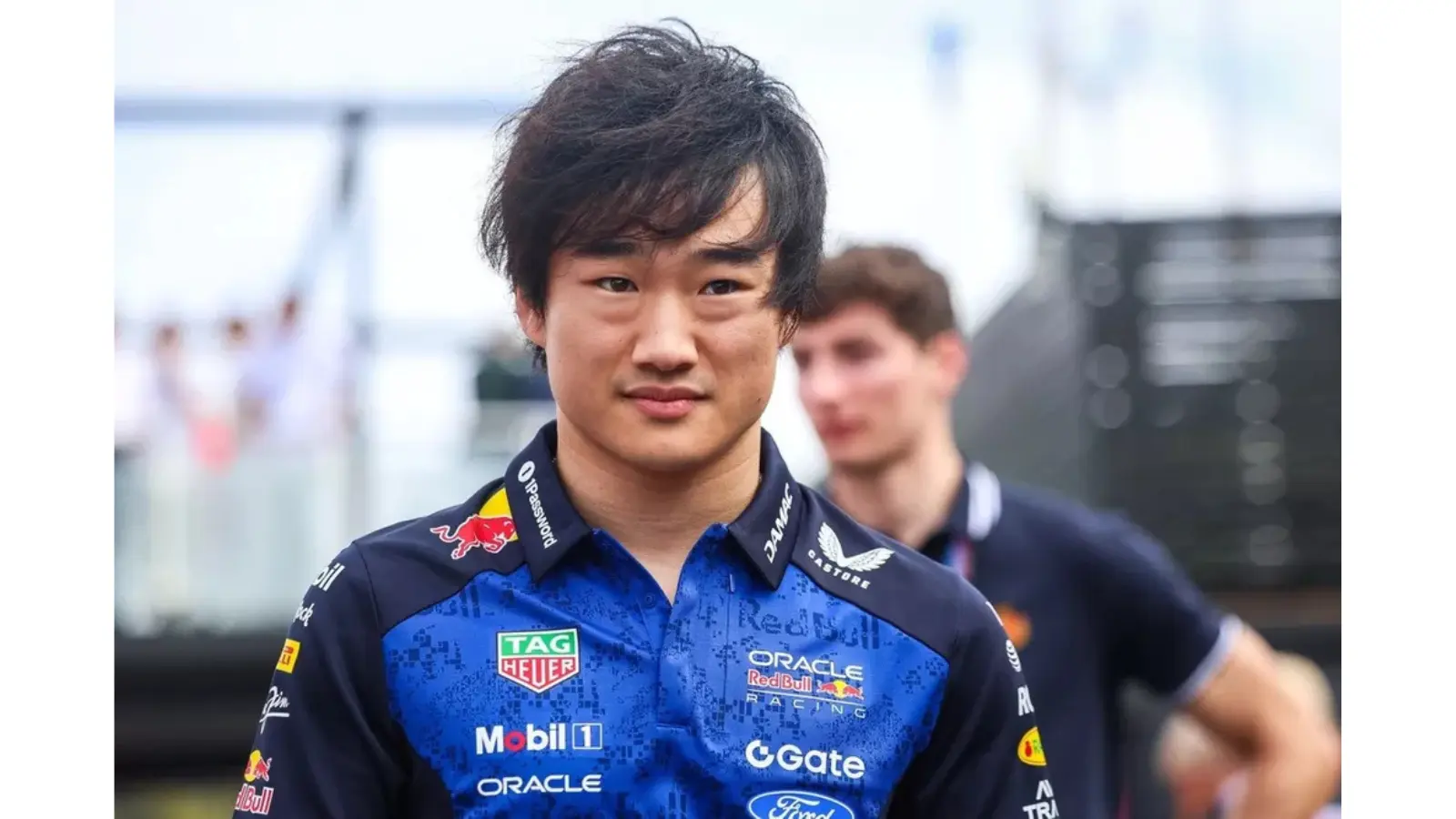
Yuki Tsunoda is officially listed as 161 centimeters (approximately 5 feet 3 inches) tall on his personal website. Some Formula 1 publications report his height as 159 centimeters, creating a small but noticeable difference between online sources. The Japanese racing driver became widely known for his performances in Formula 1, his energetic personality, and his position among the shorter drivers in the sport. Fans frequently search for Yuki Tsunoda height because photographs alongside taller competitors make the difference easy to notice. His stature has also attracted attention because Formula 1 cars require carefully designed seating positions, pedal arrangements, and cockpit dimensions. In this guide, we explain his reported height in feet and centimeters, compare him with other racing drivers, examine how height affects cockpit fit, and answer common questions about his stature and racing career in 2026.

F1 driver Yuki Tsunoda Official Site
+1
Yuki Tsunoda Height: Quick Facts

Yuki Tsunoda
Japanese Formula 1 driver
Officially listed height
161 cm
Alternative F1 listing
159 cm
Height in feet
About 5 ft 3 in
Date of birth
May 11, 2000
2026 F1 role
Test and reserve driver
Sources: Tsunoda’s official profile and Formula 1 coverage.
F1 driver Yuki Tsunoda Official Site
+2
1. How Tall Is Yuki Tsunoda in Feet and Inches?
The simplest answer is that Yuki Tsunoda is approximately 5 feet 3 inches tall. His official profile lists 161 cm, while a Formula 1 article about his first season reported 159 cm, equivalent to roughly 5 feet 2 inches when rounded down.
F1 driver Yuki Tsunoda Official Site
+1
The two figures are close enough that both are commonly summarized as approximately 5 feet 3 inches.
| Height measurement | Equivalent |
|---|---|
| Official profile | 161 cm |
| Alternative Formula 1 listing | 159 cm |
| 161 cm in meters | 1.61 m |
| 159 cm in meters | 1.59 m |
| 161 cm in feet and inches | Approximately 5 ft 3.4 in |
| 159 cm in feet and inches | Approximately 5 ft 2.6 in |
| 161 cm in total inches | Approximately 63.4 in |
| Difference between published figures | 2 cm |
These conversions use the standard relationship of 1 inch to 2.54 centimeters.
Which height should you use?
For a biography or an SEO article, the most transparent approach is to use 161 cm as the official-profile figure and note that Formula 1 has also reported 159 cm.
This avoids presenting a disputed measurement as though every source agrees.
Why do websites report different heights?
Small differences in published celebrity and athlete measurements are not unusual. They may result from:
- Different biographical databases or source records.
- Rounding when centimeters are converted into feet and inches.
- Older profiles being copied into newer articles.
- Measurements that have not been independently confirmed.
A two-centimeter discrepancy does not establish that Tsunoda has grown or lost height. Without evidence of a new measurement, it is better to describe the figures as different published listings.
2. Yuki Tsunoda Height in 2026
As of 2026, Yuki Tsunoda’s official profile continues to list his height at 161 cm. His role in Formula 1 has changed, however, making it important to separate current career information from older descriptions of him as a full-time Grand Prix driver.
F1 driver Yuki Tsunoda Official Site
+1
Red Bull announced in December 2025 that Tsunoda would move into a test and reserve role for the 2026 season, with Isack Hadjar joining Max Verstappen in its main racing lineup.
Oracle Red Bull Racing
Tsunoda subsequently returned to competitive action as a substitute during the 2026 season. Formula 1 reported his appearances at the Dutch and Italian Grands Prix following Isack Hadjar’s injury.
Formula 1® – The Official F1® Website
+1
This matters for readers searching for his height in 2026 because a current biography should reflect both his established physical measurements and his latest career position.
The key facts are:
- His official website lists him at 161 cm.
- Formula 1 has also published the 159 cm figure.
- Both measurements translate to approximately 5 feet 3 inches.
- He was widely described as the shortest driver on the 2025 grid.
- His 2026 role is primarily test and reserve driver, although he has made substitute appearances.
His height itself is not a new development in 2026. The more important recent change is his position within the Formula 1 team structure.
3. Why Is Yuki Tsunoda’s Height So Popular Online?
Formula 1 drivers are often photographed together at race weekends, on podiums, during interviews, and in team promotional material. These appearances make differences in height easy to spot.
Tsunoda’s stature has attracted particular attention because he has competed against drivers who are considerably taller. However, his height is also interesting for a practical reason: racing cars are highly specialized machines, and cockpit design must account for the driver’s body.
His height stands out beside taller drivers
When a driver who is around 160 cm tall stands next to a competitor measuring 180 cm or more, the difference is immediately visible.
Fans naturally become curious about exact measurements, especially when photographs show several drivers together.
Still, photographs are not precise measuring tools. Shoes, posture, perspective, and the position of each person can all influence how large the difference appears.
His cockpit adjustments attracted attention
Before Tsunoda’s Formula 1 debut in 2021, his team made changes to the car’s seating position and pedal arrangement to suit his proportions.
Formula 1 reported that the team added foam to raise his seating position and created a special pedal case to help him reach the pedals.
Formula 1®
These modifications show that height is relevant to cockpit ergonomics. They do not mean that a shorter driver cannot fit a Formula 1 car or that a particular height automatically improves racing performance.
His personality and racing career add to the interest
Tsunoda is known for his energetic personality and candid reactions. His move from Racing Bulls to Red Bull Racing in 2025, followed by his reserve role in 2026, also brought renewed attention to his career.
When fans research a driver, they often look up several details at once, including age, nationality, height, weight, team history, and career results.
4. Yuki Tsunoda Height Comparison With Other F1 Drivers
Comparing Tsunoda with other Formula 1 drivers helps put his stature into perspective. The table below uses approximate, commonly published measurements rather than claiming that every figure is an independently verified current measurement.
| Driver | Approximate reported height | Difference from Tsunoda at 159 cm |
|---|---|---|
| Yuki Tsunoda | 159–161 cm | Reference |
| Lando Norris | 170 cm | About 11 cm taller |
| Fernando Alonso | 171 cm | About 12 cm taller |
| Lewis Hamilton | 174 cm | About 15 cm taller |
| Pierre Gasly | 177 cm | About 18 cm taller |
| Oscar Piastri | 178 cm | About 19 cm taller |
| Charles Leclerc | 180 cm | About 21 cm taller |
| Max Verstappen | 181 cm | About 22 cm taller |
| George Russell | 185 cm | About 26 cm taller |
| Alexander Albon | 186 cm | About 27 cm taller |
Comparison figures are approximate reference values drawn from commonly published driver profiles. Heights may vary by source and rounding. Tsunoda’s official profile lists 161 cm.
F1 driver Yuki Tsunoda Official Site
+1
Yuki Tsunoda vs. Max Verstappen
Max Verstappen is commonly listed at approximately 181 cm. Compared with Tsunoda’s alternative 159 cm measurement, the difference is around 22 cm, or nearly 9 inches.
That is a substantial difference in a standing photograph. However, it does not establish that one driver has a performance advantage over the other.
Formula 1 outcomes depend on the car, setup, driving skill, race strategy, tires, weather, and many other variables. Height is only one part of a driver’s physical profile.
Yuki Tsunoda vs. Lewis Hamilton
Lewis Hamilton is commonly listed at around 174 cm, making him approximately 13–15 cm taller than Tsunoda, depending on which Tsunoda measurement is used.
This comparison shows that drivers can have noticeably different body proportions while competing in the same sport. Each driver still needs a cockpit that allows comfortable access to the controls and a suitable field of vision.
Yuki Tsunoda vs. Lando Norris
Lando Norris is commonly listed at approximately 170 cm. Using the 159 cm figure for Tsunoda, Norris is about 11 cm taller.
That difference can be noticeable in team photographs, but it is not enough to tell us anything meaningful about their relative driving ability.
Yuki Tsunoda vs. George Russell
George Russell is often listed at approximately 185 cm, making him around 26 cm taller than Tsunoda using the 159 cm reference figure.
Their height difference illustrates the range of body sizes teams must accommodate in Formula 1. A driver needs a customized fit, not a body shape that matches every other competitor.
5. Is Yuki Tsunoda the Shortest F1 Driver?
Tsunoda was widely described as the shortest driver on the 2025 Formula 1 grid, with published reports commonly using a height of 159 cm.
Formula 1®
However, the wording matters in a 2026 article. Tsunoda is no longer a regular full-time driver on the grid. Red Bull moved him into its test and reserve lineup for the 2026 season, and he later made substitute appearances during the year.
Oracle Red Bull Racing
+1
It is therefore more accurate to describe him as one of the shortest drivers in recent Formula 1 history and the shortest driver on the 2025 grid, rather than automatically calling him the shortest active full-time driver in 2026.
Does being the shortest driver matter?
The label attracts attention because it is an easy way to compare drivers, but it does not provide a complete picture of their abilities.
A meaningful evaluation of a Formula 1 driver includes:
- Qualifying pace and race performance.
- Consistency across different circuits.
- Tire management and technical feedback.
- Overtaking, defensive driving, and racecraft.
- Adaptability to changing weather and track conditions.
- Communication with engineers and understanding of car setup.
Height may influence cockpit design, but it is not a substitute for any of these performance measures.
6. Yuki Tsunoda Height Compared With the Average Person
Another common search is how Tsunoda’s height compares with the average man. At approximately 159–161 cm, he is shorter than the average adult man in Japan and the United States.
Population averages differ by country, age group, and survey method, so the figures below are approximate reference points rather than universal standards.
| Person or group | Approximate height | Difference from Tsunoda at 159 cm |
|---|---|---|
| Yuki Tsunoda | 159 cm | Reference |
| Adult at 165 cm | 165 cm | 6 cm taller |
| Average adult man in Japan | Around 171 cm | Around 12 cm taller |
| Average US adult man | Around 175 cm | Around 16 cm taller |
| Adult at 180 cm | 180 cm | 21 cm taller |
| Adult woman at 160 cm | 160 cm | 1 cm taller |
Average-height figures are rounded general references, not precise measurements for every population. Using Tsunoda’s official 161 cm listing would reduce each stated difference by 2 cm.
Is Yuki Tsunoda short compared with the average man?
Yes. His listed height is below the average adult male height in many populations. But being shorter than average is a normal variation in human height, not an indication of poor health or reduced athletic ability.
Is he shorter than the average woman?
At 159–161 cm, Tsunoda is around the height of many adult women and shorter than the average adult woman in some countries, including the United States.
Such comparisons depend on the population being measured. They are useful for understanding scale, but they do not establish anything about an individual’s fitness or performance.
Does average height matter in Formula 1?
Not in the same way it may matter in sports where reach or standing height directly affects the basic mechanics of play.
Formula 1 drivers operate a vehicle from a seated position. Their cockpit must fit their bodies, but racing performance depends on a much broader combination of physical, technical, and mental skills.
7. How Height Affects a Formula 1 Driver
Formula 1 cars are built with very tight packaging requirements. The cockpit must accommodate the driver while leaving room for structural components, safety systems, and the equipment needed to operate the car.
Tsunoda’s experience illustrates how teams can adapt a car to an individual driver’s proportions.
Cockpit fit and seating position
The driver’s seat must provide support under heavy braking and cornering. It also needs to position the driver’s eyes appropriately for track visibility.
In Tsunoda’s case, Formula 1 reported that foam was added to the monocoque area to raise his seating position. The team also developed a special pedal case to help him reach the pedals.
Formula 1®
These adjustments were designed to help him operate the car effectively. They were not evidence that he was unable to drive a standard Formula 1 car.
Pedal reach and control
Drivers must operate the accelerator and brake precisely while managing high forces and rapid changes in speed.
If a driver’s legs do not comfortably reach the pedals, the team must consider the position of the seat and the pedal assembly. The objective is to achieve reliable control without compromising the driver’s posture.
The exact arrangement depends on the car’s design and the driver’s individual measurements.
Weight and vehicle balance
A driver’s body contributes to the total mass of the car and driver together. Mass distribution also affects vehicle setup, which is one reason driver size sometimes enters discussions about Formula 1 engineering.
However, the rules constrain how teams can exploit differences in driver weight and ballast placement. Tsunoda himself pushed back against the idea that being short provided a major advantage in aerodynamics or weight distribution.
Formula 1®
This is an important distinction: a shorter driver may present different packaging challenges, but that does not automatically make the car faster.
Does being shorter make a driver quicker?
There is no reliable basis for claiming that shorter drivers are inherently faster in Formula 1.
Height alone does not determine reaction time, cornering skill, racecraft, concentration, fitness, or the ability to communicate technical information to engineers. These factors, together with car performance, have a much greater role in determining race outcomes.
8. Yuki Tsunoda Height Growth Timeline
Fans sometimes compare Tsunoda’s junior racing photographs with his current appearances and wonder whether he grew significantly before entering Formula 1.
There is no reliable public year-by-year height chart that documents his measurements throughout childhood. The table below therefore separates known career milestones from verified published height information instead of inventing annual measurements.
| Year or period | Career milestone | What is known about his height |
|---|---|---|
| 2000 | Born in Sagamihara, Japan, on May 11 | No childhood measurement cited here |
| Junior years | Progressed through karting and junior racing categories | No verified annual height figures available |
| 2019 | Competed in Formula 3 | No reliable annual measurement established |
| 2020 | Competed in Formula 2 | No reliable annual measurement established |
| 2021 | Made his Formula 1 debut with AlphaTauri | Formula 1 reported 159 cm |
| 2022–2024 | Continued racing in Formula 1 | Public profiles commonly retained the 159 cm figure |
| 2025 | Raced for Racing Bulls before moving to Red Bull Racing | He continued to be described as approximately 159 cm tall |
| 2026 | Moved into a test and reserve role and made substitute appearances | His official profile lists 161 cm |
F1 driver Yuki Tsunoda Official Site
+3
Did Yuki Tsunoda grow after his F1 debut?
The available information does not establish a significant change in his adult height. The difference between 159 cm and 161 cm may reflect inconsistent records rather than actual growth.
Tsunoda was 20 years old when he made his Formula 1 debut in 2021. By that age, most men have reached their adult height, although the timing of growth varies between individuals.
Why is an exact growth timeline unavailable?
A trustworthy growth timeline would require dated measurements taken using consistent methods. Race photographs and interviews cannot reliably establish someone’s height to the nearest centimeter.
For this reason, an accurate article should not claim that Tsunoda was a specific height at age 12, 15, or 18 without a credible source documenting that measurement.
9. What Determines a Person’s Height?
Tsunoda’s height is publicly listed, but his personal genetic and medical history cannot be inferred from a driver profile. Human height generally develops through a combination of genetics, nutrition, hormones, and environmental factors.
Genetics and family background
Genetics is one of the most important influences on adult height. Many genes contribute to skeletal development and growth patterns.
Family height can provide useful clues, but it cannot predict an exact measurement. Even siblings can have different adult heights despite sharing many inherited traits.
Without reliable information about Tsunoda’s family measurements and development, it would be inappropriate to attribute his stature to a specific genetic cause.
Nutrition during childhood
Adequate nutrition supports normal growth and development. The body needs sufficient energy, protein, vitamins, and minerals to build healthy bones and tissues.
Long-term nutritional deficiencies can interfere with normal growth, while a balanced diet helps children meet their developmental needs. However, good nutrition does not guarantee a particular adult height.
There is no evidence in the sources discussed here that Tsunoda’s height resulted from a specific diet or nutritional issue.
Hormones and puberty
Growth hormone, thyroid hormones, and sex hormones all play important roles in human development. During puberty, hormonal changes contribute to growth spurts and the maturation of the skeleton.
When the growth plates in the long bones close, further natural increases in skeletal height are generally no longer possible.
Sleep and overall health
Adequate sleep supports normal development, especially in children and teenagers. General health also matters because some illnesses and medical conditions can affect growth.
However, sleeping more or following a particular routine will not make an adult significantly taller once normal skeletal growth has ended.
Exercise and posture
Exercise supports muscle strength, coordination, and bone health. Good posture can also help someone stand at their natural height.
Stretching, yoga, and strength training cannot lengthen adult bones after the growth plates close. Any change in apparent height caused by improved posture is different from actual skeletal growth.
These factors explain human height in general. They do not establish the specific reasons for Tsunoda’s individual height.
10. Interesting Facts About Yuki Tsunoda’s Height
His stature has attracted attention for several reasons, ranging from the technical details of his cockpit to the difference between his published measurements.
-
His official website lists 161 cm. Formula 1 has also published the 159 cm figure, so both measurements appear in reputable sources. F1 driver Yuki Tsunoda Official Site+1
-
He was the shortest driver on the 2025 grid. Formula 1’s published profile described him as measuring 159 cm, or about 5 feet 2 inches. Formula 1®
-
His car needed ergonomic adjustments. The team modified his seating position and pedal arrangement before his debut. Formula 1®
-
He questioned whether being short was a major advantage. Tsunoda said the benefits in weight distribution and aerodynamics were limited. Formula 1®
- He has competed against much taller drivers. The commonly published figures for some competitors exceed 180 cm, producing differences of more than 20 cm.
-
His Formula 1 role changed in 2026. He became a test and reserve driver, with substitute appearances later in the season. Oracle Red Bull Racing+1
Does Tsunoda wear special shoes to reach the pedals?
The documented adjustment involved a special pedal case and changes to his seating position. The Formula 1 report cited here does not establish that he needed special shoes. It is best to distinguish the reported engineering changes from assumptions about his footwear.
Does his height affect his weight?
Height and weight are different measurements, although they can be related to body composition. Honda’s official driver profile lists Tsunoda at 53 kg as well as 161 cm tall.
Honda Global
Weight can vary over time, and it cannot be determined accurately from height alone. Muscle mass, body composition, and other individual factors all play a role.
Can a shorter driver compete successfully in Formula 1?
Yes. Formula 1 teams can adjust the cockpit and controls to suit the driver within the technical and safety rules. A shorter stature does not prevent someone from developing the skills needed to compete at the highest level.
Tsunoda’s career illustrates why driver ability should be judged through racing performance, not height alone.
11. Frequently Asked Questions About Yuki Tsunoda Height
1. How tall is Yuki Tsunoda?
Yuki Tsunoda is officially listed at 161 cm on his personal website. Formula 1 has also reported 159 cm, so his commonly cited height is approximately 5 feet 3 inches.
F1 driver Yuki Tsunoda Official Site
+1
2. What is Yuki Tsunoda’s height in feet and inches?
His height is approximately 5 feet 3 inches. The 159 cm measurement converts to about 5 feet 2.6 inches, while 161 cm converts to approximately 5 feet 3.4 inches.
3. What is Yuki Tsunoda’s height in centimeters?
His official profile lists 161 cm, although Formula 1 has used 159 cm in its coverage. Both measurements are widely circulated, so the source should be identified when precision matters.
4. Is Yuki Tsunoda shorter than Max Verstappen?
Yes. Verstappen is commonly listed at approximately 181 cm, compared with Tsunoda’s 159–161 cm. That creates an approximate height difference of 20–22 cm.
5. Is Yuki Tsunoda the shortest Formula 1 driver?
He was widely described as the shortest driver on the 2025 grid. In 2026, he moved into a test and reserve role, although he later made substitute appearances. His historical grid ranking should not automatically be treated as a ranking of full-time drivers in 2026.
Oracle Red Bull Racing
+1
6. Does Yuki Tsunoda’s height give him a racing advantage?
Not necessarily. A shorter body may create different cockpit-packaging options, but it does not automatically make a car faster. Tsunoda has said that the potential benefits for weight distribution and aerodynamics are limited.
Formula 1®
7. Why did AlphaTauri modify Tsunoda’s cockpit?
The team adjusted his seating position and created a special pedal case to help him reach the pedals comfortably and see the track clearly. These changes helped tailor the car to his body proportions.
Formula 1®
8. Has Yuki Tsunoda’s height changed since 2021?
There is no reliable public evidence establishing a significant change in his adult height. The difference between the 159 cm and 161 cm figures may reflect inconsistent published records rather than actual growth.
9. Is Yuki Tsunoda shorter than the average man?
Yes. At approximately 160 cm, he is shorter than the average adult man in Japan and many other countries. However, average height varies across populations, and being shorter than average does not indicate poor fitness or reduced racing ability.
10. What is Yuki Tsunoda’s height in 2026?
As of 2026, his official website lists him at 161 cm, or approximately 5 feet 3 inches. This is the most straightforward figure to use when citing his official profile.
F1 driver Yuki Tsunoda Official Site
Conclusion
Yuki Tsunoda’s height is officially listed as 161 cm (approximately 5 feet 3 inches), although Formula 1 has also reported 159 cm. This makes him noticeably shorter than many of his competitors, including Max Verstappen and George Russell. His stature has attracted attention partly because Formula 1 teams must adapt cockpit seating and pedal arrangements to suit each driver’s proportions. However, height alone does not determine racing ability, and Tsunoda’s career shows why performance, precision, fitness, and technical skill matter far more than appearance. In 2026, he continues his Formula 1 journey in a test and reserve role, with substitute appearances during the season.

Your favorite destination for viral pickup lines, dating humor, love quotes, and flirty chat ideas.